(VOVWORLD) - A rice cooking contest is an age-old tradition held every spring in Thi Cam village in Hanoi.
On the eighth day of the first lunar month, Thi Cam villagers take part in their traditional rice cooking contest, with the aim of praying for a prosperous, happy, and peaceful new year.
The event commemorate the village's tutelary deity, Phan Tay Nhac, a general of the 18th Hung King who ruled Vietnam thousands of years ago. (Photo: Tuan Anh/VOV)
Organisers prepare bags of rice straw for the 4 participating teams, who represent the village's 4 residential areas. (Photo: Tuan Anh/VOV)
The teams tear nứa, a type of Vietnamese bamboo into thin pieces to make them more flammable. (Photo: Tuan Anh/VOV)
The contestants weave the straws into bundles, which are then place under and on top of clean stone mortars. (Photo: Tuan Anh/VOV)
Straw bundles are shaped into chicken nests under the stone mortars to stabilize them. (Photo: Tuan Anh/VOV)
Straws are also padded on the mortars' rims to prevent rice from spilling out. (Photo: Tuan Anh/VOV)
The village's courtyard is packed. The rice cooking contest has three phases: Fire making, water collecting, and rice cooking. Children from 12-14 participate in a 700m marathon from the village's courtyard to its north to collect water. Whoever brings water back to the courtyard first wins. (Photo: Tuan Anh/VOV)
The first 2 phases of the contest begin at 11AM sharp. (Photo: Tuan Anh/VOV)
The remaining contestants at the courtyard start making fire with only dry bamboo and straws. They are overjoyed to see the first spark. (Photo: Tuan Anh/VOV)
The teams return to their position to take care of their rice pots. (Photo: Tuan Anh/VOV)
The paddy is pounded with stone mortars and big pestles. (Photo: Tuan Anh/VOV)
The four young contestants return. The first to arrive was Nguyễn Vinh Khoa of residential 4 (rightmost). (Photo: Tuan Anh/VOV)
The courtyard is filled with smoke, sound of drums, and cheering. (Photo: Tuan Anh/VOV)
Cooking rice with straw and firewood requires a lot of experience. Most participants are the village's elderly. (Photo: Tuan Anh/VOV)
Hand-pounded rice is more difficult to cook, according to village elders. (Photo: Tuan Anh/VOV)
The contestants burn straws to make ashes to cover the rice pots, which helps cook the rice. (Photo: Tuan Anh/VOV)
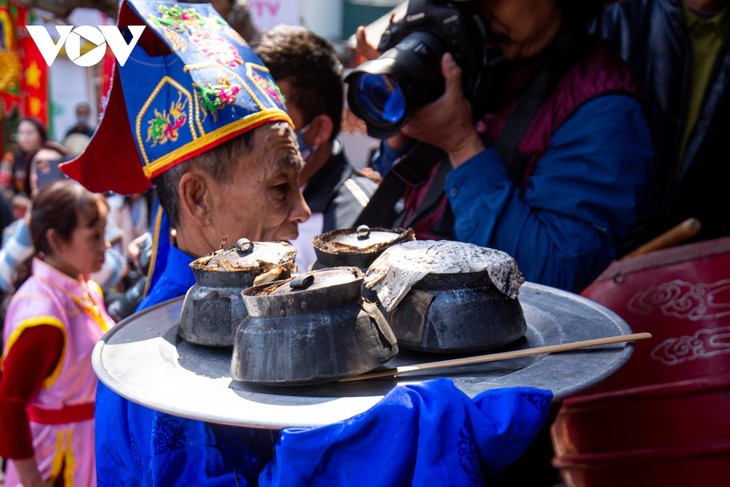
The time limit is indicated with a burning incense. The judges will locate the rice pots in a multitude of ash piles after the incense is burnt out. The rice is then brought outside for a public judging of the rice quality. (Photo: Tuan Anh/VOV)



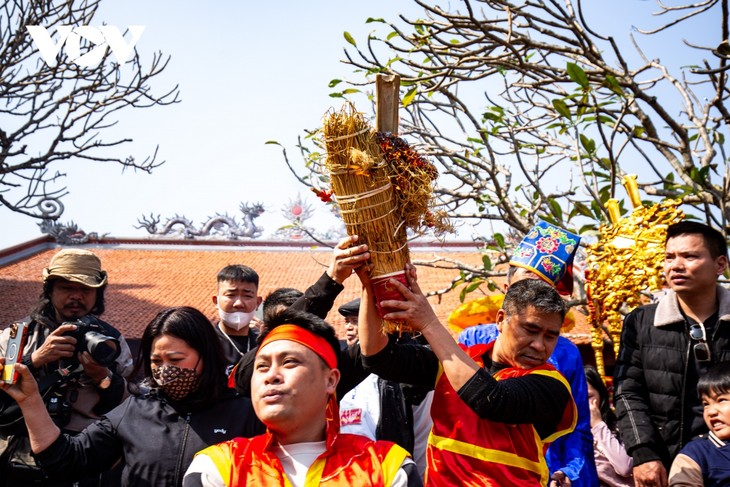 The event commemorate the village's tutelary deity, Phan Tay Nhac, a general of the 18th Hung King who ruled Vietnam thousands of years ago. (Photo: Tuan Anh/VOV)
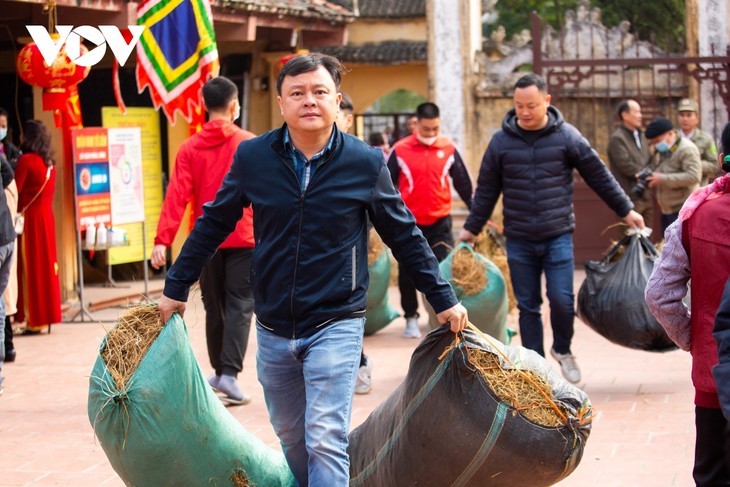 Organisers prepare bags of rice straw for the 4 participating teams, who represent the village's 4 residential areas. (Photo: Tuan Anh/VOV)
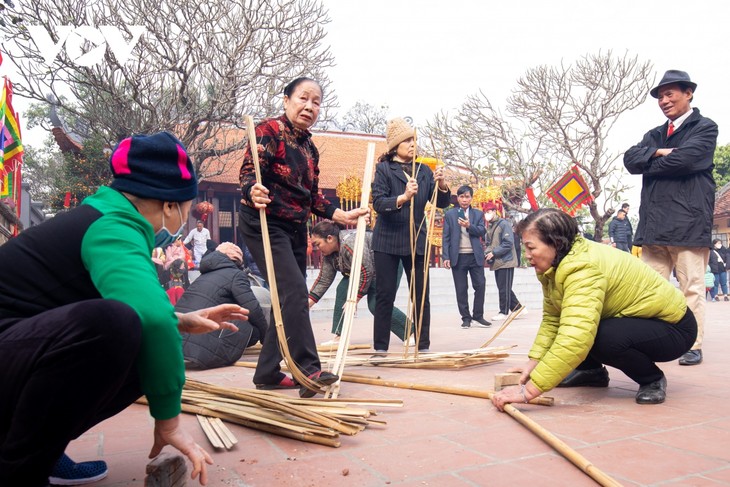 The teams tear nứa, a type of Vietnamese bamboo into thin pieces to make them more flammable. (Photo: Tuan Anh/VOV)
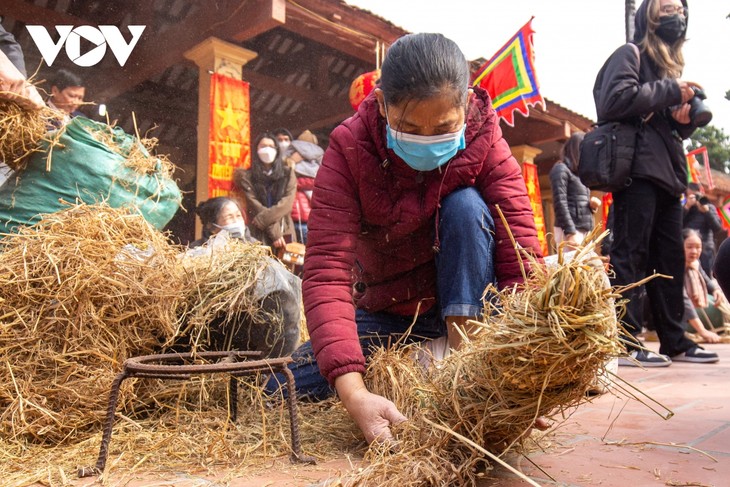 The contestants weave the straws into bundles, which are then place under and on top of clean stone mortars. (Photo: Tuan Anh/VOV)
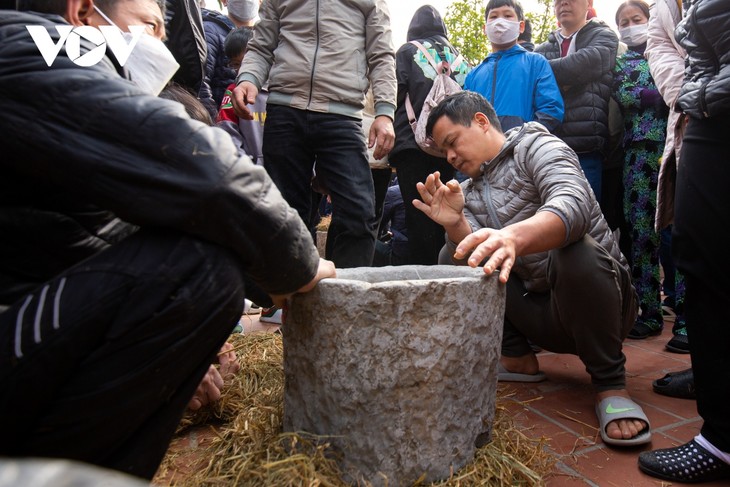 Straw bundles are shaped into chicken nests under the stone mortars to stabilize them. (Photo: Tuan Anh/VOV)
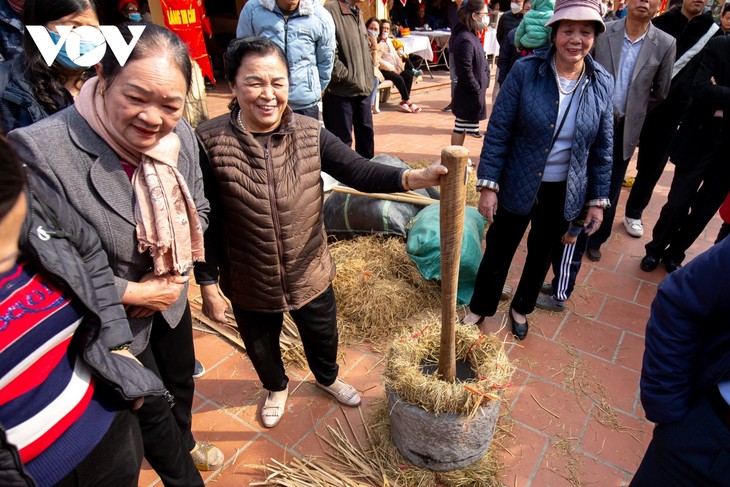 Straws are also padded on the mortars' rims to prevent rice from spilling out. (Photo: Tuan Anh/VOV)
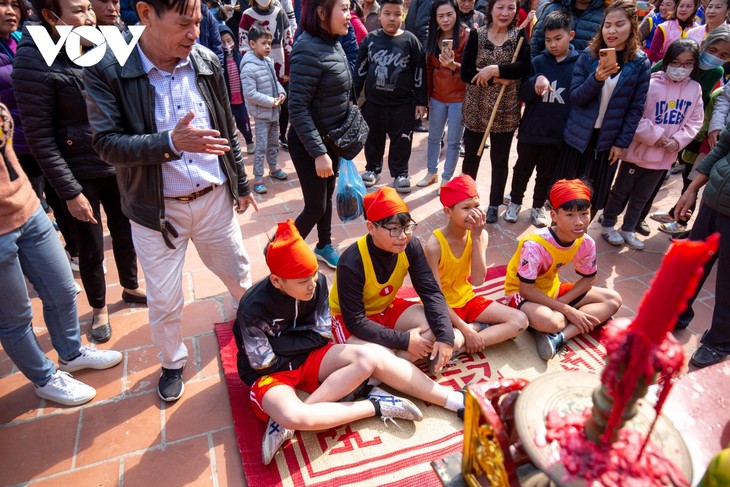 The village's courtyard is packed. The rice cooking contest has three phases: Fire making, water collecting, and rice cooking. Children from 12-14 participate in a 700m marathon from the village's courtyard to its north to collect water. Whoever brings water back to the courtyard first wins. (Photo: Tuan Anh/VOV)
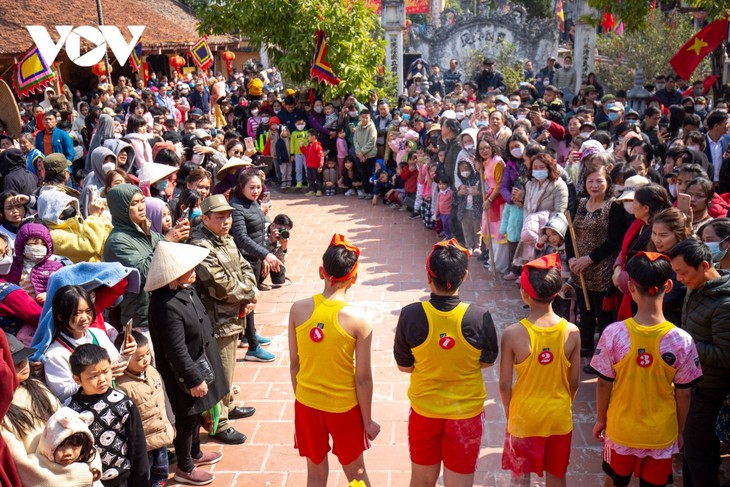 The first 2 phases of the contest begin at 11AM sharp. (Photo: Tuan Anh/VOV)
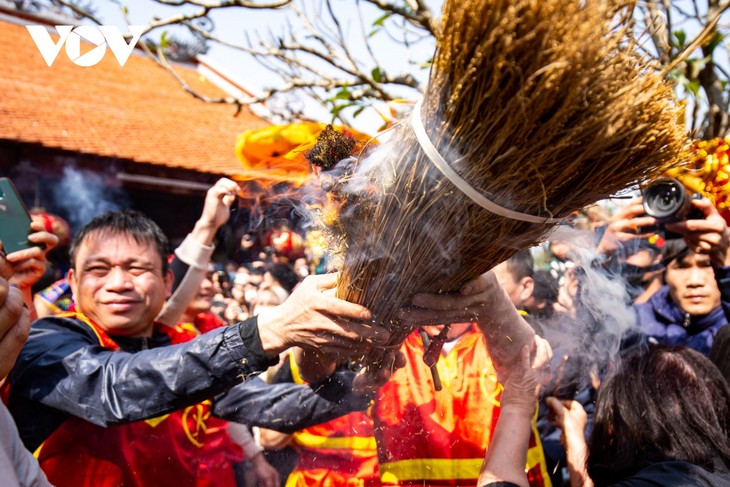 The remaining contestants at the courtyard start making fire with only dry bamboo and straws. They are overjoyed to see the first spark. (Photo: Tuan Anh/VOV)
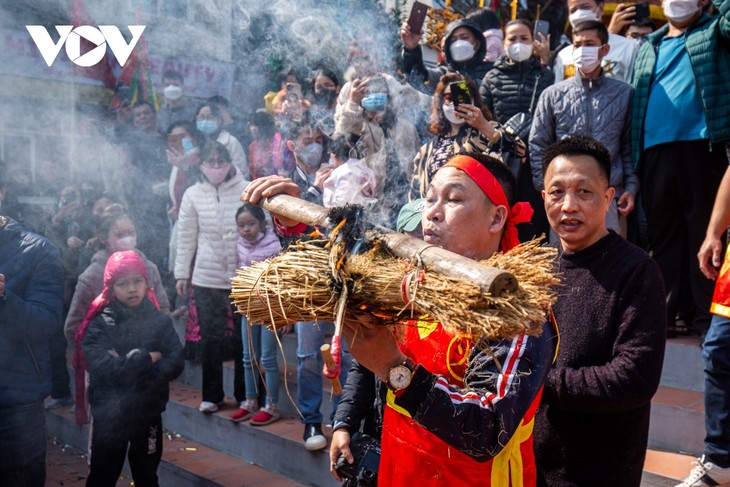 The teams return to their position to take care of their rice pots. (Photo: Tuan Anh/VOV)
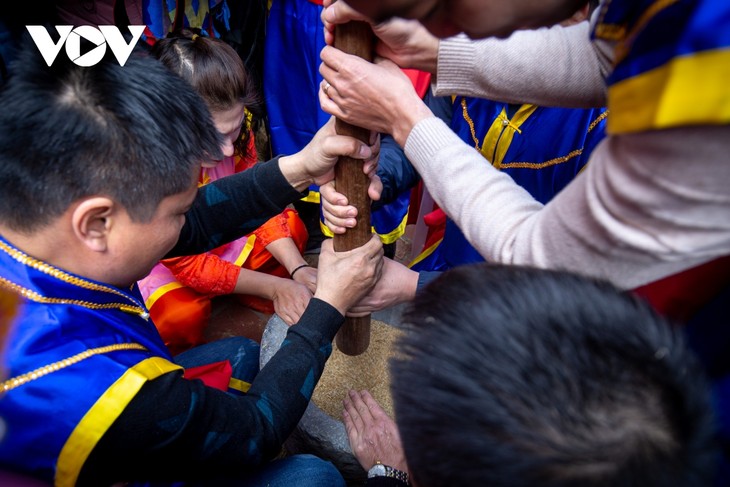 The paddy is pounded with stone mortars and big pestles. (Photo: Tuan Anh/VOV)
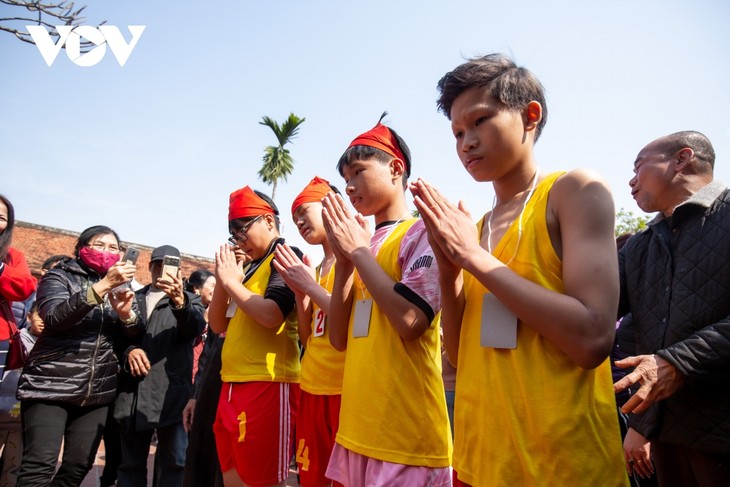 The four young contestants return. The first to arrive was Nguyễn Vinh Khoa of residential 4 (rightmost). (Photo: Tuan Anh/VOV)
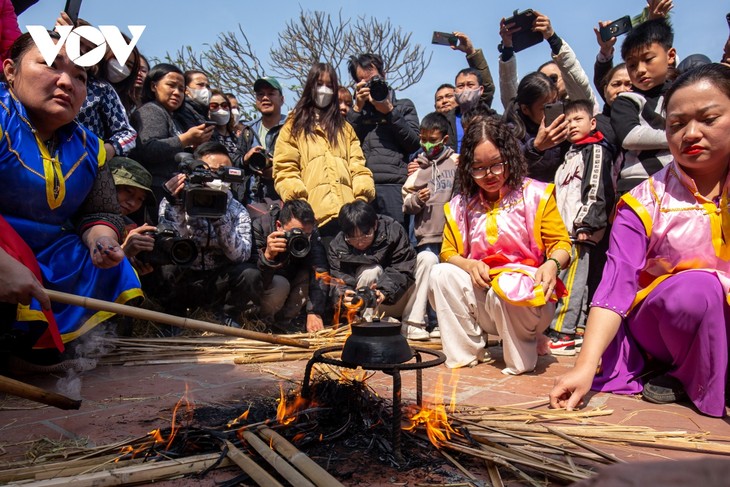 The courtyard is filled with smoke, sound of drums, and cheering. (Photo: Tuan Anh/VOV)
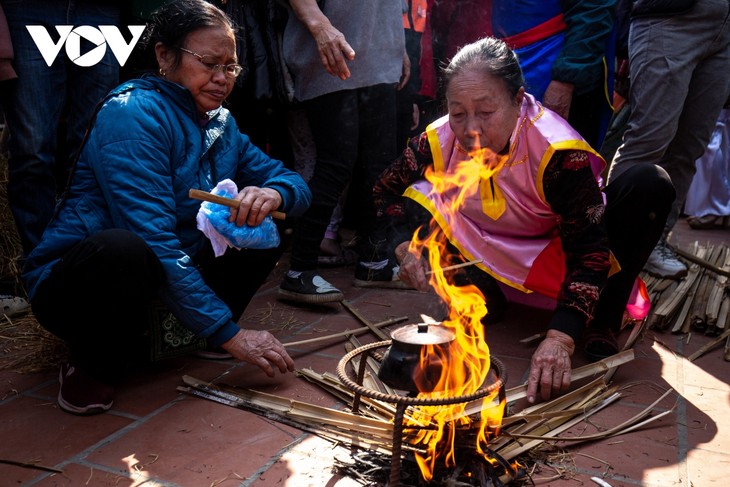 Cooking rice with straw and firewood requires a lot of experience. Most participants are the village's elderly. (Photo: Tuan Anh/VOV)
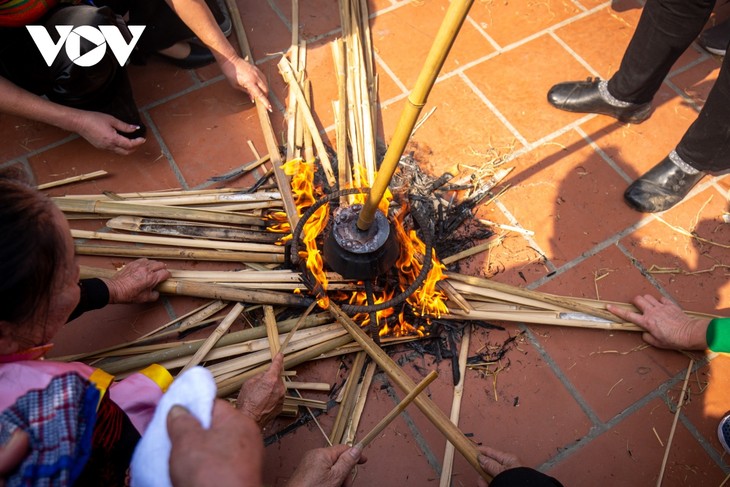 Hand-pounded rice is more difficult to cook, according to village elders. (Photo: Tuan Anh/VOV)
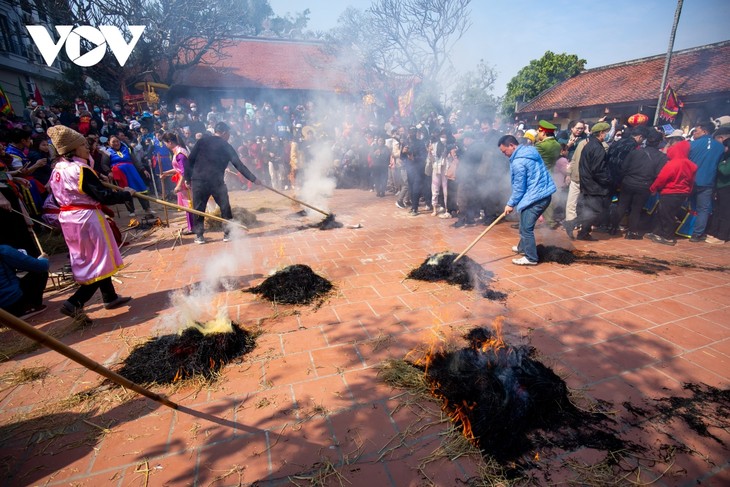 The contestants burn straws to make ashes to cover the rice pots, which helps cook the rice. (Photo: Tuan Anh/VOV)
 The time limit is indicated with a burning incense. The judges will locate the rice pots in a multitude of ash piles after the incense is burnt out. The rice is then brought outside for a public judging of the rice quality. (Photo: Tuan Anh/VOV)


